Pixel Synthesizers: AI in Contemporary VJing

This research was presented at ERVA 90 — Artificial Intelligence (AI), Narrativa y procesos creativos aplicados al audiovisual, 3rd Encuentro, organised by Telenoika — an open-creation audiovisual community based in Barcelona —, at La Occulta BCN, on 29 March 2026. Misteria shared the night with other international art and AI projects, among live VJ and DJ performances.
This presentation explores the integration of Artificial Intelligence into the workflow for creating images and videos in the context of VJing. I will show how this technology was applied as a technical tool within an authorial artistic process, through a methodology that goes from research to the use of AI as a motion synthesizer and animation generator. I will present the creative flow that resulted in the sets of my participation in VJ Torna Brasil 2025. The focus here is not on automation, but on building an aesthetic identity aligned with AI video generation and VJ performance.
The foundation of this creative process is a structured pre-production methodology, which turns an abstract idea into a viable technical execution. Everything starts with the Mood Board, where the visual references and colour palettes that define the aesthetic “soul” of the project are gathered. Then the Storyboard organises that aesthetic on a timeline, creating a narrative and a script for the evolution of the images. In short, it is this flow that keeps creativity from getting lost in improvisation, allowing the artist to master the technology instead of being mastered by it.
After the rigour of pre-production and the immersion in curating references, the creative flow between the artist’s eye and the synthesis of Artificial Intelligence resulted in four distinct narrative sets. Each one explores a facet of our reality, bringing technique and poetics together to translate the feeling of pulse and resistance that drives this work.
From here on, we will go through the creation process, the challenges and the aesthetic grounding of each of these sets:
- Retratos do Brasil: Social Documentary and Visual Memory
- Brasil Gambiarra: The Aesthetics of Collage and Social Critique
- Derrete Man - The Anatomy of Melting
- O Narcisismo Iluminado
Retratos do Brasil: Social Documentary and Visual Memory
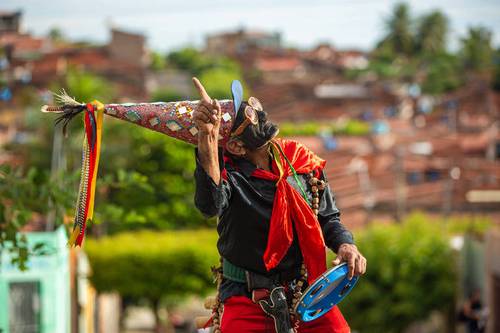
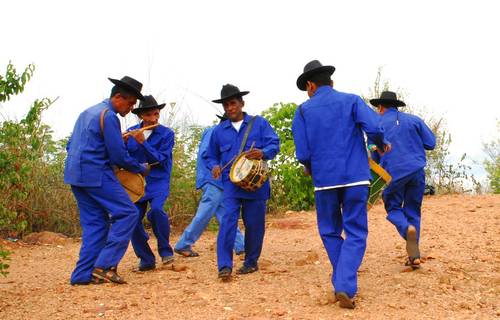
Research and curation of images portraying the imagery of popular culture from the Brazilian Northeast and of Indigenous culture. The idea for this set is to focus on the weight of the human figures and on their diversity, in order to convey visual strength and Brazilianness.







The Concept:
- Curation and Research: A dialogue with the tradition of Brazilian social documentary to portray figures of popular culture (cowherds, fishermen, washerwomen, Indigenous people and street performers).
- Reframing the Gaze: Turning photographic records into “living samples” through a realistic and human aesthetic, with the use of artificial intelligence.
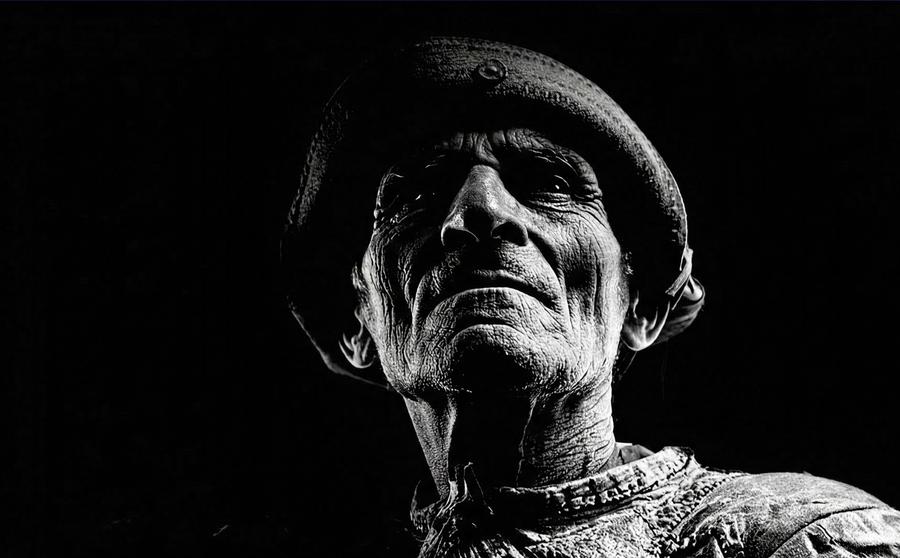
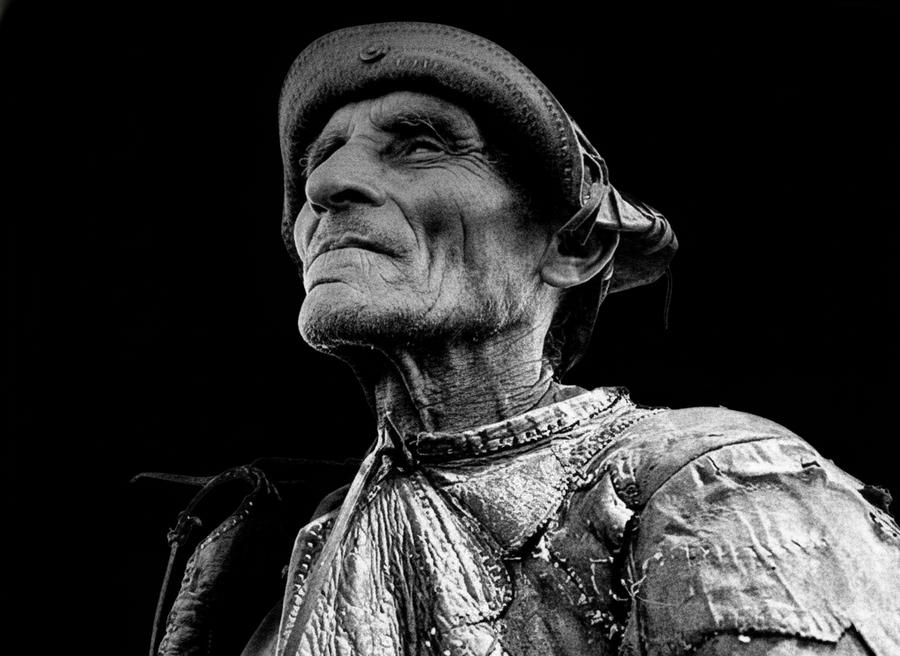
Cutting out the background, turning the image into a PNG. Generating motion with the Veo 3 tool (Google AI).
mp4 file.
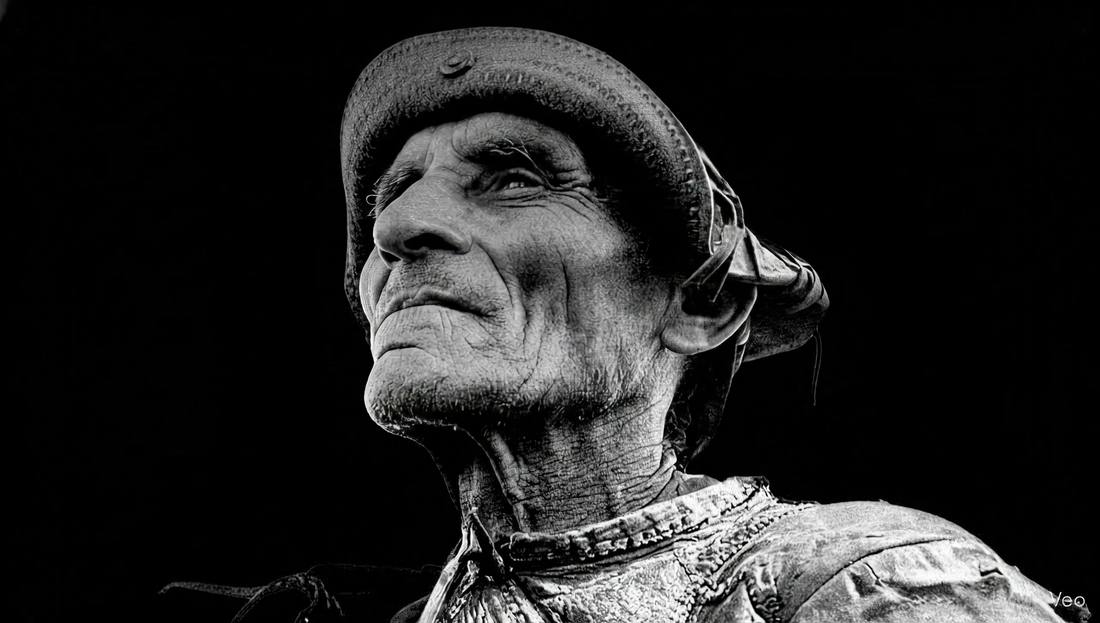
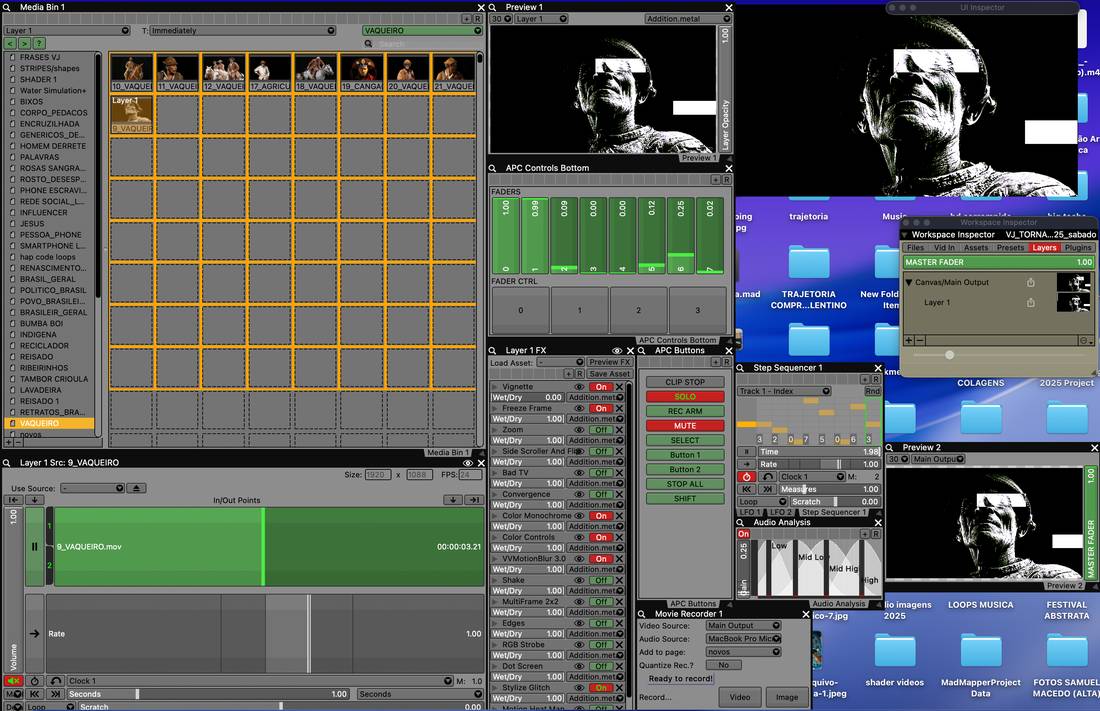
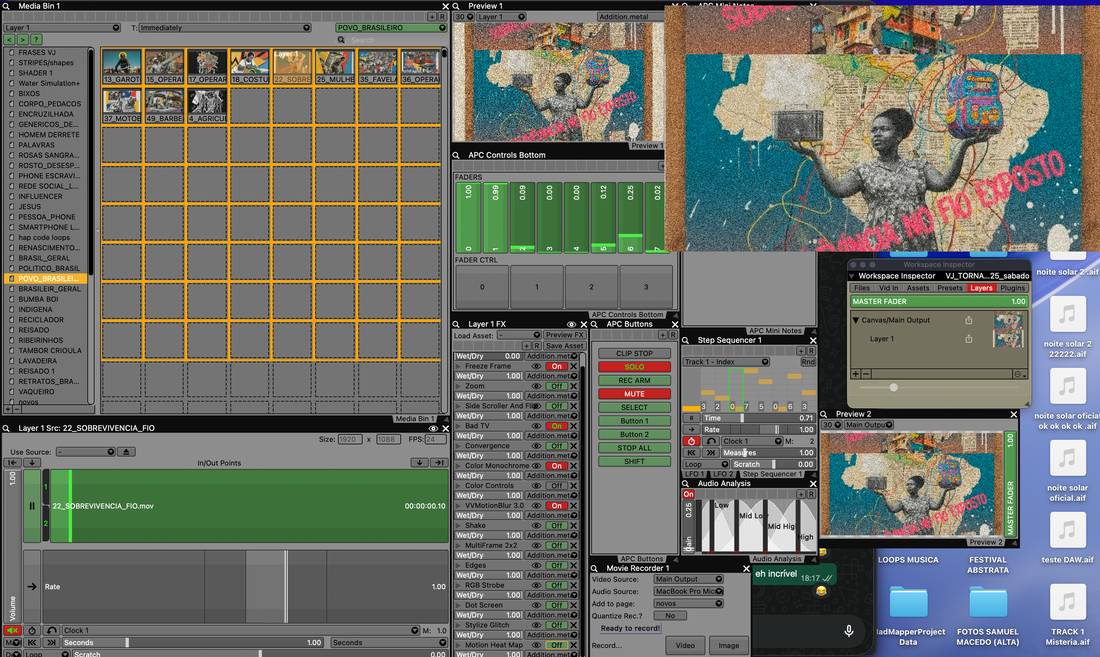
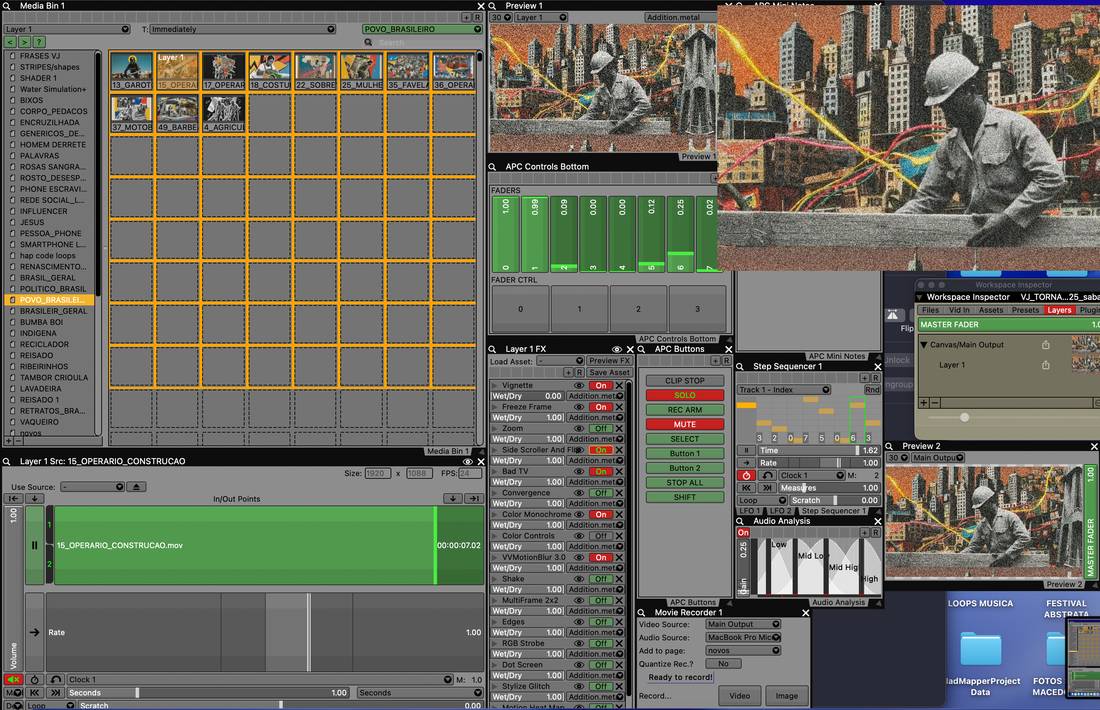
Effects applied to the generated file using VDMX. File exported in HAP format for real-time playback.
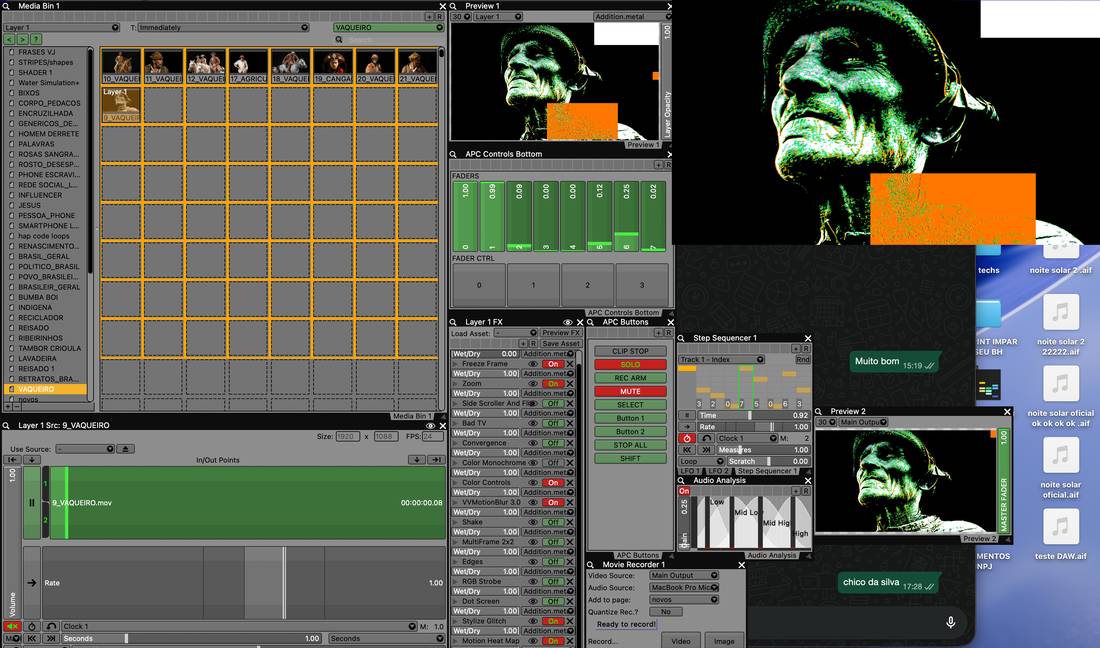
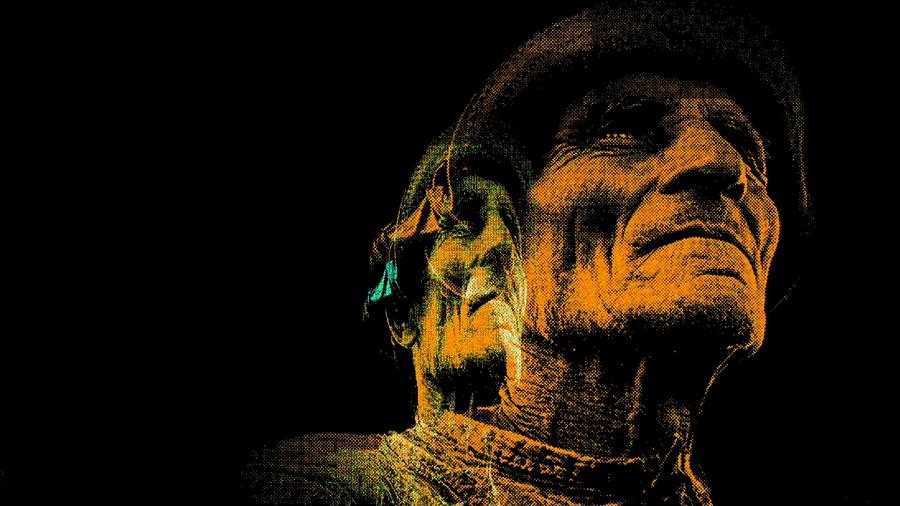
Final file (loop) exported in HAP.
Why AI? Rationale and Efficiency in the Creative Flow
Optimisation and Technical Agility
- A Solution for Rotoscoping: AI made it possible to isolate and animate human figures from documentary photographs quickly. Using original videos would have required an extremely complex and slow rotoscoping process, which motion synthesis overcame.
- Focus on the Character: Full control to remove backgrounds and concentrate the narrative on the gesture and presence of the human figure.
“Glitch” as Aesthetic Camouflage
- Synergy with VJing: The nature of live manipulation — with fast cuts, glitch effects and intense rhythm — absorbs and reframes the artificiality of AI. The imperfections of the motion become aesthetic textures that reinforce the concept instead of distracting the audience.
Simplicity and Narrative Precision
- The Minimalism of the Gesture: Choosing subtle movements avoided AI “hallucinations” and communication errors. The aim was to extract only the essential: the gesture and the “breath” of the character.
Visual Consistency at Scale: AI made it possible to create an aesthetic unity across dozens of different loops. The same “motion behaviour” could be applied to characters of different origins, creating a cohesive library for the tournament.
Low-Cost, High-Impact Prototyping: The possibility of testing dozens of motion variations for the same image in a few minutes, something impossible in traditional animation.
A Hybrid of Static and Dynamic: AI created a visual “third way”: images that keep the dignity and detail of documentary photography, but with the energy needed for the video flow.
Brasil Gambiarra: The Aesthetics of Collage and Social Critique
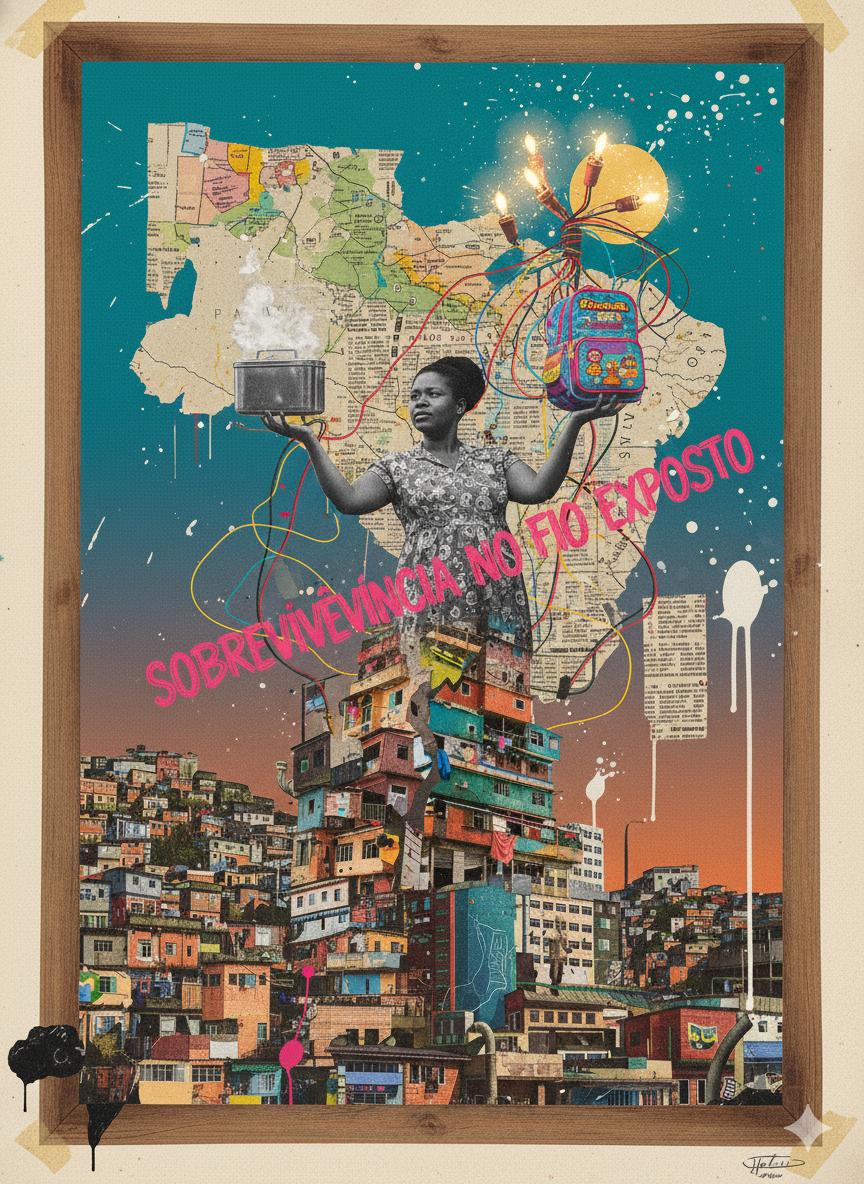
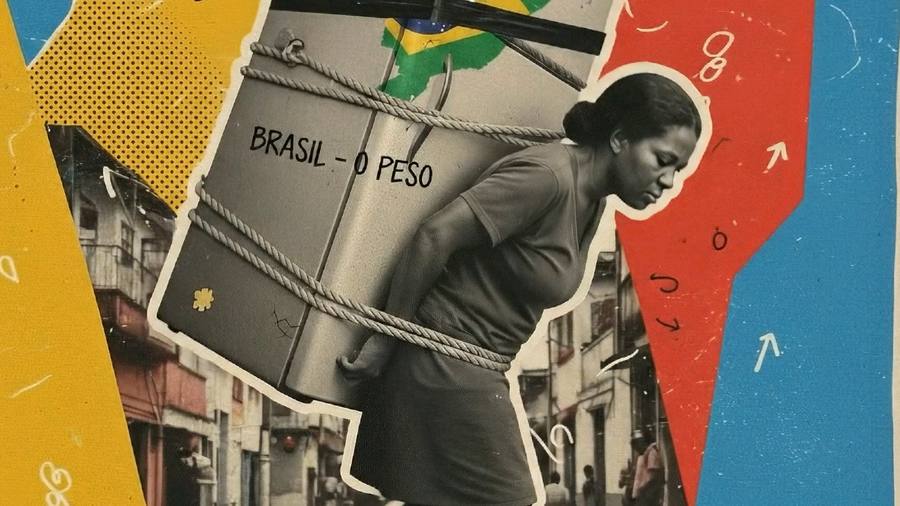
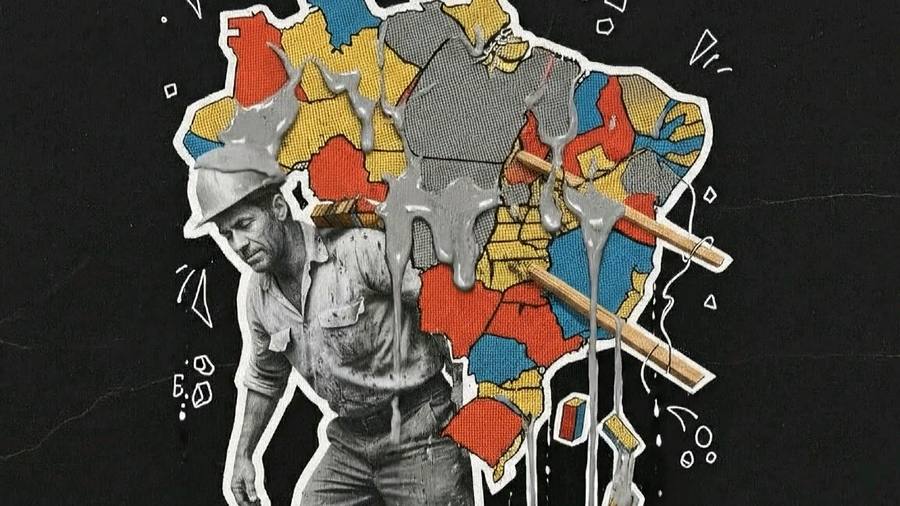
The Brasil Gambiarra set uses Artificial Intelligence to explore collage as a metaphor for a country built on patches and contradictions. Unlike the previous set, here AI acts directly in generating the scenes, guided by an obsessive curation of visual references from the 1970s and a selection of terms with a strong social charge, such as ‘gambiarra’ (makeshift fix) and ‘corruption’. The foundation of this work is not random generation, but control of the aesthetic ‘temperature’: a balance between faded colour and dramatic black and white. The success of this flow depended on the artist’s ability to filter countless ‘failures’ generated by the machine until finding the image that translated the project’s guiding phrase: the idea that Brazil is held up by the strength of those who have little. In live performance, these synthetic collages become a pulsing visual critique, where the artificiality of AI reinforces the feeling of a fragmented reality under constant reconstruction.
Collage references
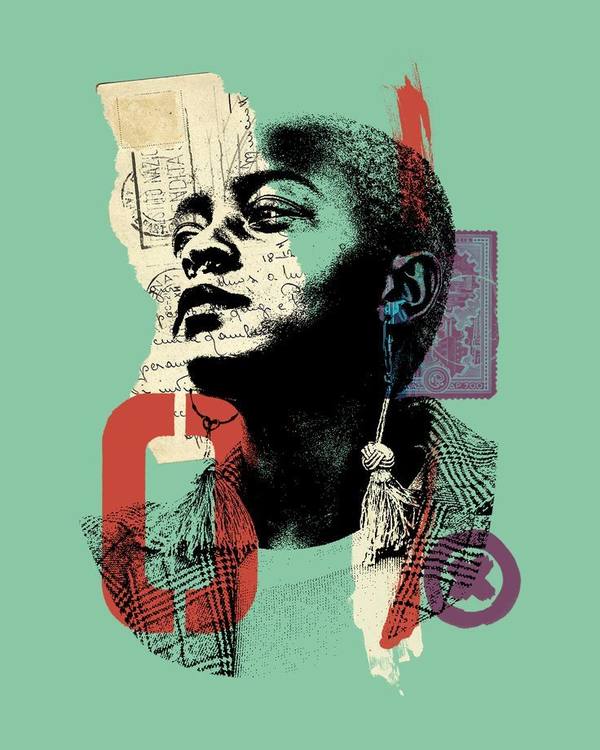
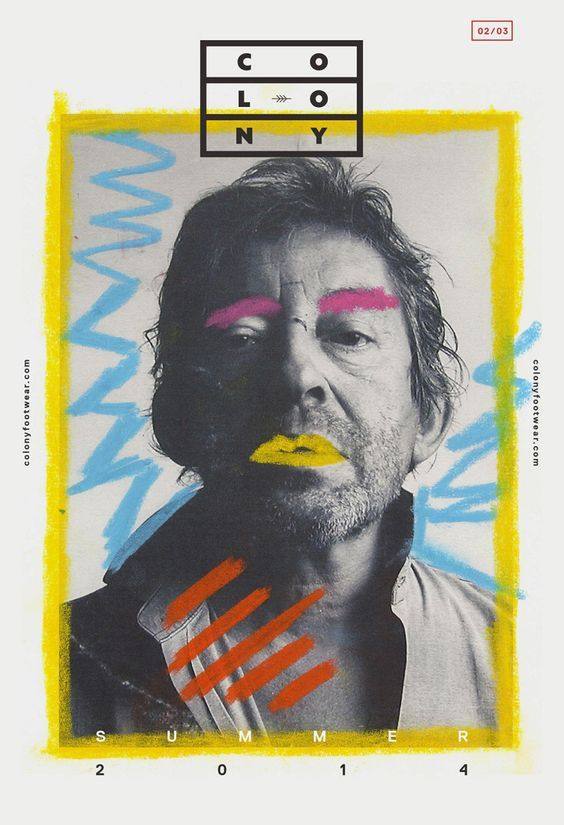

1. Concept: “The country only stays standing because those who have little hold everything up”
- Theme: Developing Brazil, precariousness and ingenuity (gambiarra).
- Aesthetic Direction: Anachronistic collage with a 1970s influence, faded colours, grain and high-contrast black and white.
Collages Generated with AI - Veo 3
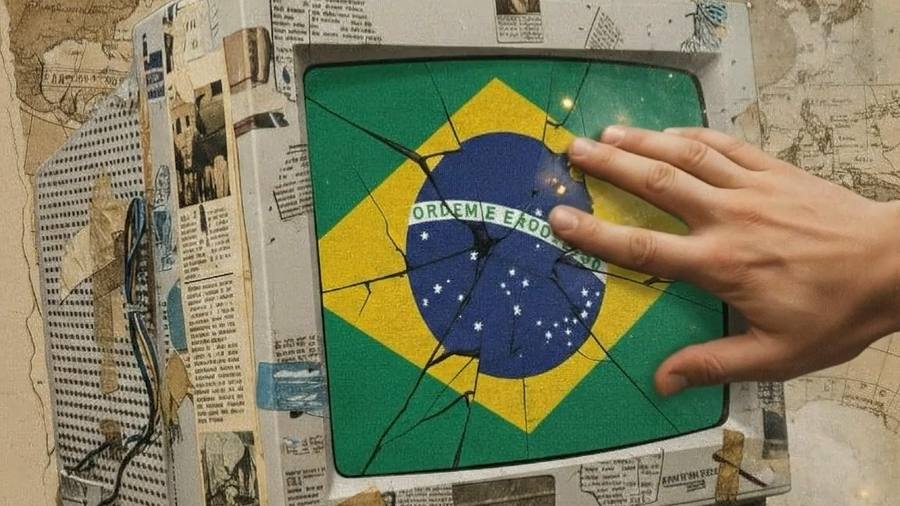
2. AI as Digital Collagist
- Curation of References: A rigorous selection of analogue collages to “teach” the AI the desired colour temperature and composition.
- Prompt Engineering: Use of visceral keywords (Gambiarra, Corruption, City, Poverty) and striking phrases to steer the semantic charge of the videos.
mp4 file.
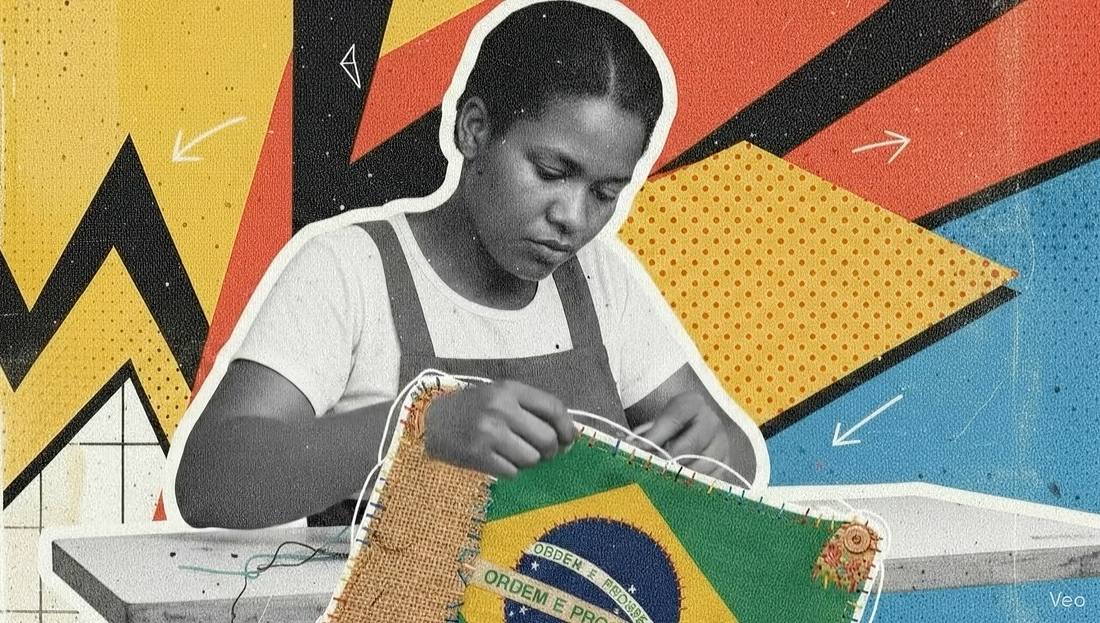
Effects applied to the generated file using VDMX. File exported in HAP format for real-time playback.
The Sensory Narrative: Pulsing Brazil
The central strategy of this performance was to create a sensory environment that would translate the duality of Brazilian identity through the contrast between two complementary themes. By crossing Retratos do Brasil — which celebrates iconic, pulsing, rich figures of our culture — with Brasil Gambiarra — which exposes a country held hostage by inequality and political neglect —, the narrative proposes a semiotic reflection on who really holds the nation up. The aim was to use the flow of images to present, symbolically and poetically, the reality that the figures who build the foundations of the country are the same ones who bear the weight of social injustice. This aesthetic fusion, heightened by real-time manipulation, turns the set into a visual manifesto, where the beauty of tradition and the rawness of precariousness merge to produce an experience of emotional impact and critical awareness.
AI as a Tool for Translation and Synthesis
In this workflow, Artificial Intelligence was integrated as a strategic technical component, acting as a bridge between documentary research and real-time performance. In the Retratos do Brasil set, it worked as a motion synthesizer, bringing the characters to life without harming the strength of the original photograph. In the Brasil Gambiarra set, AI took on the role of a digital collagist, processing complex concepts and critical phrases to generate an aesthetic of fragmentation and precariousness. What set the use of AI apart in this process was not automation, but creative agility: the technology allowed the artist to focus on curation and on building a semiotic narrative, delegating to the machine the making of the visual assets under strict control of the aesthetic ‘temperature’. In this way, AI did not replace the eye; it amplified the VJ’s capacity to translate Brazilian complexity into a powerful and cohesive audiovisual experience.
Derrete Man - The Anatomy of Melting
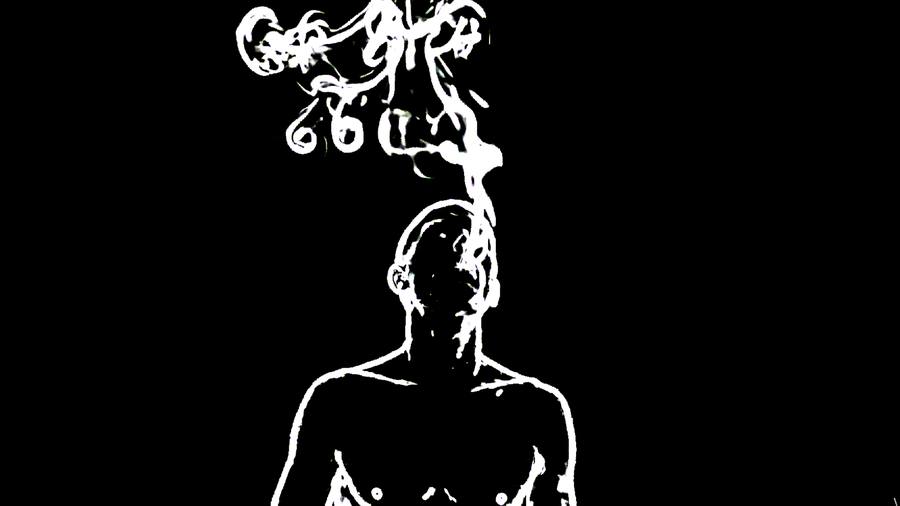

The minimalist black-and-white aesthetic, centred exclusively on the outline of the human form, was adopted as a conceptual strategy to translate visually the scarcity of human essence in a world saturated with excess and distorted values. By isolating the human figure, stripped of detail and texture, against the void, the simple, solitary line becomes the portrait of the vulnerability of Homo Sapiens, whose melting happens not through an external attack, but through passive, constant immersion in an unceasing flow of digital distractions and pressure for productivity. This graphic reduction to the essential symbolises the loss of the “soul” and autonomy of the individual who, hypnotised by the superfluous and with hands busy holding a phone, watches their own substance liquefy in a daily, banal event, devoid of authentic meaning.
Animations generated by AI - Veo 3
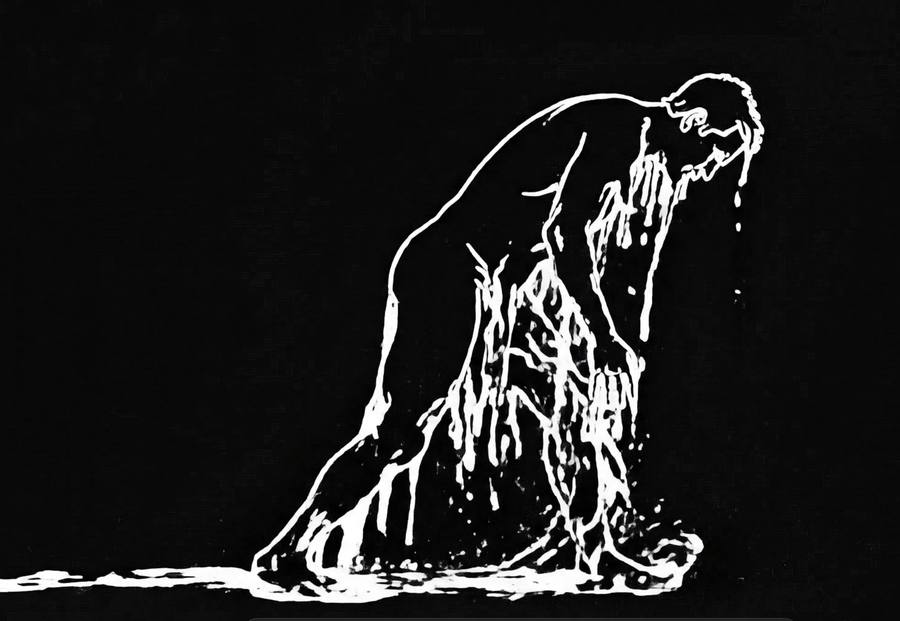
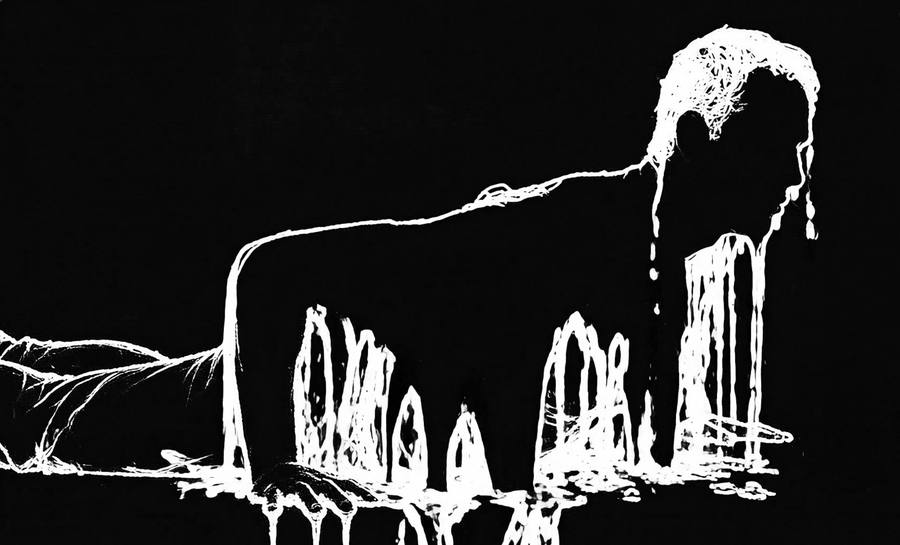
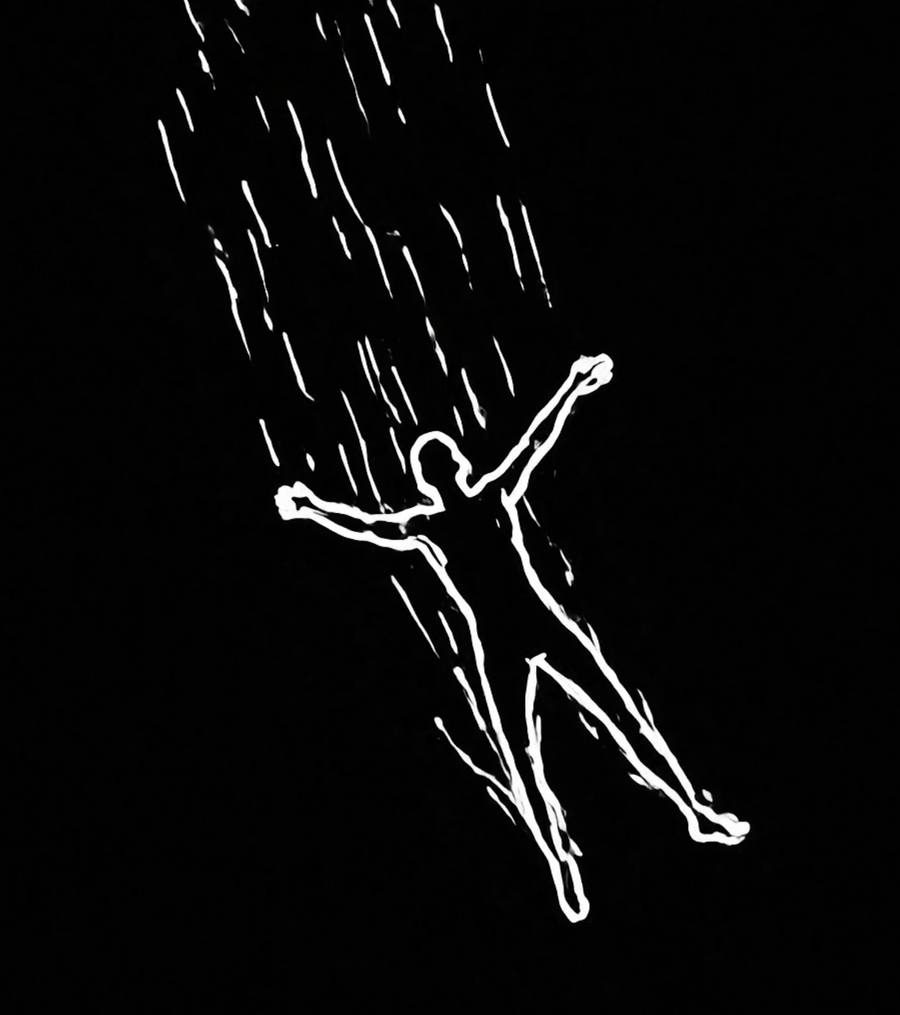
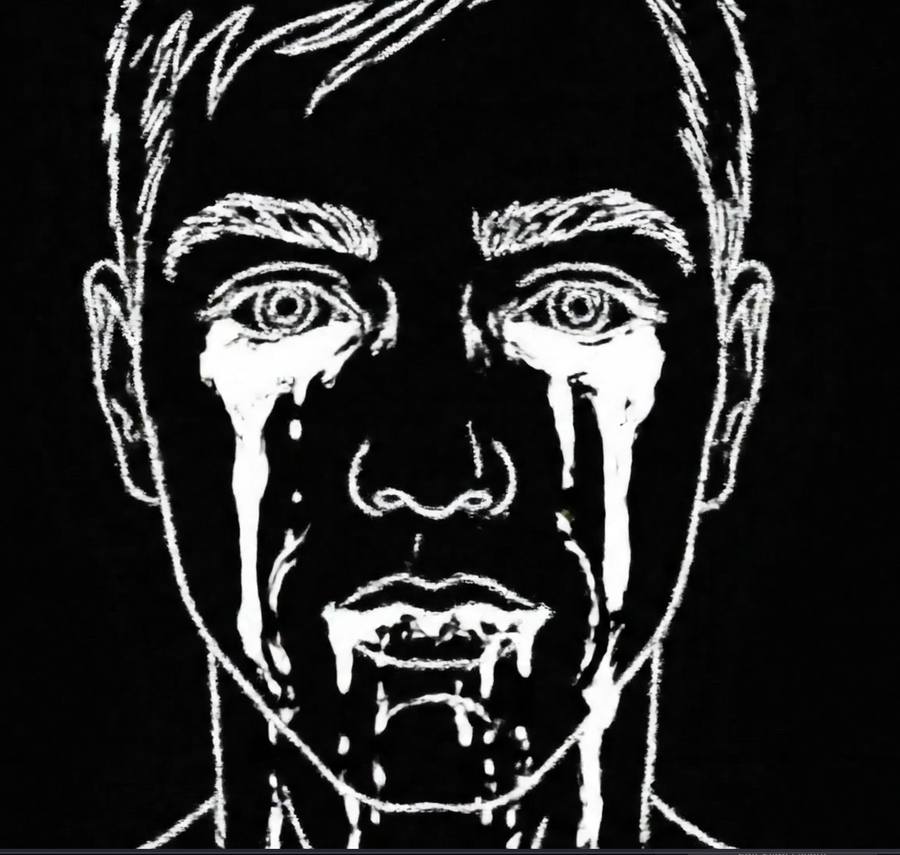
Artificial intelligence was integrated into the creative process not as an automation tool, but as an engine of visual synthesis and organic fluidity, able to translate the changing nature of “melting” in a way traditional drawing would struggle to replicate. The use of generative video and animation models made it possible to explore the unpredictability of liquid matter, turning the minimalist outline into a living substance that reacts to gravity and movement. The process was strictly iterative: AI supplied the raw visual “mass” from conceptual prompts, while human direction refined the timing, the cadence and the aesthetic sobriety, making sure the technology served the narrative of exhaustion and not visual spectacle. In this way, the very “unstable” nature of the AI-generated image became a metaphor for the instability of contemporary Sapiens.
Prompt 01: The Solitary Walker — “Minimalist animation in line-art style, absolute black background, thin white outline of a man walking slowly. As he moves forward, his feet and legs begin to melt and run like liquid wax, leaving a black trail in the void. High contrast, 2D, hand-drawn line.”
Prompt 02: The Inverted Fall — “Simplified humanoid body falling upside down in a black vacuum. Black-and-white engraving aesthetic. The body liquefies in real time, with the human substance rising towards the top of the frame while the weight falls. Fluid, cinematic movement, viscous liquid simulation.”
Prompt 03: The Hypnotic Distraction — “Close-up of the profile of a human figure holding a glowing rectangle (phone). The light from the object makes the figure’s face melt and run down the arms. Only white outlines on a black background. Minimalist style, focused on the dissolution of form by light.”
O Narcisismo Iluminado

The conceptual core of this set is a rereading of the Myth of Narcissus for the smartphone era. In the Renaissance, portraits were commissioned to immortalise virtue, status or piety. Here, the figure uses the technical apparatus (the phone with flash) as a digital mirror, creating an instant “painting” of itself — the selfie.
The main theme is the irony of self-representation in the age of influence. The image deconstructs the notion of beauty and authenticity.
In short, this work uses the solemnity of Renaissance art to frame the ephemeral and the superficial, questioning the values of our society, centred on image and constant validation.
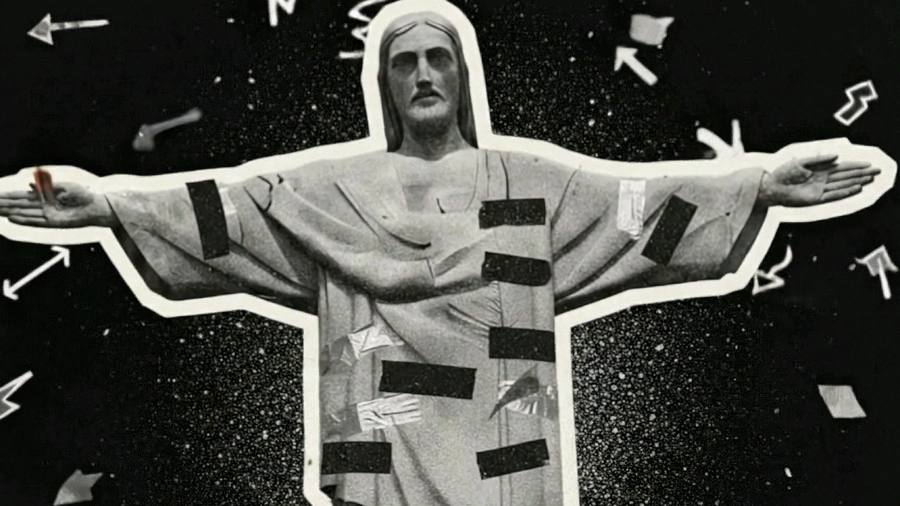
Animations generated by AI - Veo 3




The Central Concept: Desacralising the Sacred and Sacralising the Trivial
The concept that ties all the images together is ironic juxtaposition. The aim is to take figures, poses and lighting styles that historically represented the divine, the martyr, holiness and virtue, and fill them with the “sacraments” of modernity: smartphones, emojis, hashtags and consumer products.
This creates a visual contrast. On seeing Christ or a saint holding a phone, we are forced to question where we place our “faith” and our attention nowadays. The images suggest that the algorithm has become our new God, and the like, our new blessing.
AI as a Synthesizer of Narratives: From Concept to Pulsing Image
In this process, Artificial Intelligence is not a random generator of content, but a tool of synthesis, integrated objectively to give body to ideas that were born with pen and paper. It acts as a technical bridge that makes it possible to turn an obsessive curation of references into a dynamic, cohesive visual experience.
In the Retratos do Brasil set, AI was used as a motion-synthesis tool. The aim here was purely technical and narrative: instead of facing an extremely slow manual rotoscoping process, the technology made it possible to isolate figures from documentary photographs and inject an artificial “breath” into them. The use of the Veo model allowed still images to gain the energy needed for the video flow, creating a “third way” that keeps the dignity of the original photograph while pulsing to the rhythm of VJing.
In the Brasil Gambiarra set, AI took on the role of a digital collagist. Here the collaboration was more semantic: I used prompt engineering to process visceral terms and concepts with a strong social charge, such as “gambiarra” and “corruption”. AI turned those words into images that carry the aesthetic of the patch and of fragmentation, serving as a visual metaphor for Brazilian reality.
For Derrete Man, AI was the engine that brought the organic fluidity the concept of melting needed. Through generative video models, it was possible to explore the unpredictability of liquid matter, something traditional drawing would struggle to replicate with the same naturalness. The prompts were designed so that the machine would supply the raw “visual mass”, while human control refined the timing and cadence to avoid distractions and focus on the essential: the character’s gesture of exhaustion.
In the closing set, O Narcisismo Iluminado, AI helped build a narrative of ironic juxtaposition. It was used to fill poses and aesthetics consecrated by Renaissance art with the “sacraments” of modernity, such as smartphones and hashtags, creating an immediate visual contrast about where we place our attention today.
In short, AI helped raise the level of the performance by allowing high-impact prototyping and an aesthetic unity that would be impossible to achieve at scale with traditional methods. It absorbs and reframes its own artificiality, turning imperfections into aesthetic textures that reinforce the narrative of a Brazil under constant reconstruction.
Valentino C. Kmentt — Misteria, Studio for Research and Creation in Art and Audiovisual Technologies. Original presentation given on 28/03/2026, at ERVA 90 (Telenoika, Barcelona).